
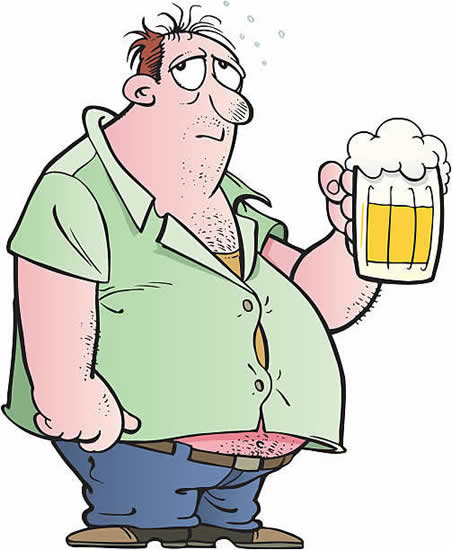
 Suppose that once a week, ten men go out for beer and the bill for all ten comes to $100.
If they paid their bill the way we pay our taxes, it would go something like this…..
The first four men (the poorest) would pay nothing.
The fifth would pay $1.
The sixth would pay $3.
The seventh would pay $7.
The eighth would pay $12.
The ninth would pay $18
And the tenth man (the richest) would pay $59.
So, that’s what they decided to do. The ten men drank in the bar every week and seemed quite happy with the arrangement until, one day, the owner caused them a little problem. “Since you are all such good customers,” he said, “I’m going to reduce the cost of your weekly beer by $20.” Drinks for the ten men would now cost just $80.
The group still wanted to pay their bill the way we pay our taxes. So the first four men were unaffected. They would still drink for free but what about the other six men? The paying customers? How could they divide the $20 windfall so that everyone would get his fair share?
They realised that $20 divided by six is $3.33 but if they subtracted that from everybody’s share then not only would the first four men still be drinking for free but the fifth and sixth man would each end up being paid to drink his beer.
So, the bar owner suggested that it would be fairer to reduce each man’s bill by a higher percentage. They decided to follow the principle of the tax system they had been using and he proceeded to work out the amounts he suggested that each should now pay.
And so, the fifth man, like the first four, now paid nothing (a 100% saving).
The sixth man now paid $2 instead of $3 (a 33% saving).
The seventh man now paid $5 instead of $7 (a 28% saving).
The eighth man now paid $9 instead of $12 (a 25% saving).
The ninth man now paid $14 instead of $18 (a 22% saving).
And the tenth man now paid $49 instead of $59 (a 16% saving).
Each of the last six was better off than before with the first four continuing to drink for free. But, once outside the bar, the men began to compare their savings. “I only got $1 out of the $20 saving,” declared the sixth man. He pointed to the tenth man, “but he got $10”
“Yes, that’s right,” exclaimed the fifth man. “I only saved $1 too. It’s unfair that he got ten times more benefit than me”
“That’s true” shouted the seventh man. “Why should he get $10 back, when I only got $2? The wealthy get all the breaks”
“Wait a minute,” yelled the first four men in unison, “We didn’t get anything at all. This new tax system exploits the poor”
The nine men surrounded the tenth and beat him up.
The next week the tenth man didn’t show up for drinks, so the nine sat down and had their beers without him. But when it came time to pay the bill, they discovered something important – they didn’t have enough money between all of them to pay for even half of the bill.
And that, boys and girls, journalists and government ministers, is how our tax system works. The people who already pay the highest taxes will naturally get the most benefit from a tax reduction. Tax them too much, attack them for being wealthy and they just might not show up anymore. In fact, they might start drinking overseas, where the atmosphere is somewhat friendlier.
For those who understand, no explanation is needed.
For those who do not understand, no explanation is possible.